Existing housing: renovation and energy efficiency
We modernize and renovate select residential complexes to improve their structural and energy-efficiency characteristics.

For existing buildings, thermal retrofits and technical measures can help reduce energy consumption for heating and hot water and improve a building’s energy efficiency.
Depending on the condition and technical capabilities of a residential complex, we evaluate measures such as improving the building envelope, replacing windows, or adjusting the heating system.
Which measures can be implemented and what impact they have on energy consumption depends on the specific building and its technical condition.
Lower energy demand can – depending on energy prices, usage patterns, and other factors – also contribute to lower energy costs. The actual savings therefore vary from case to case.
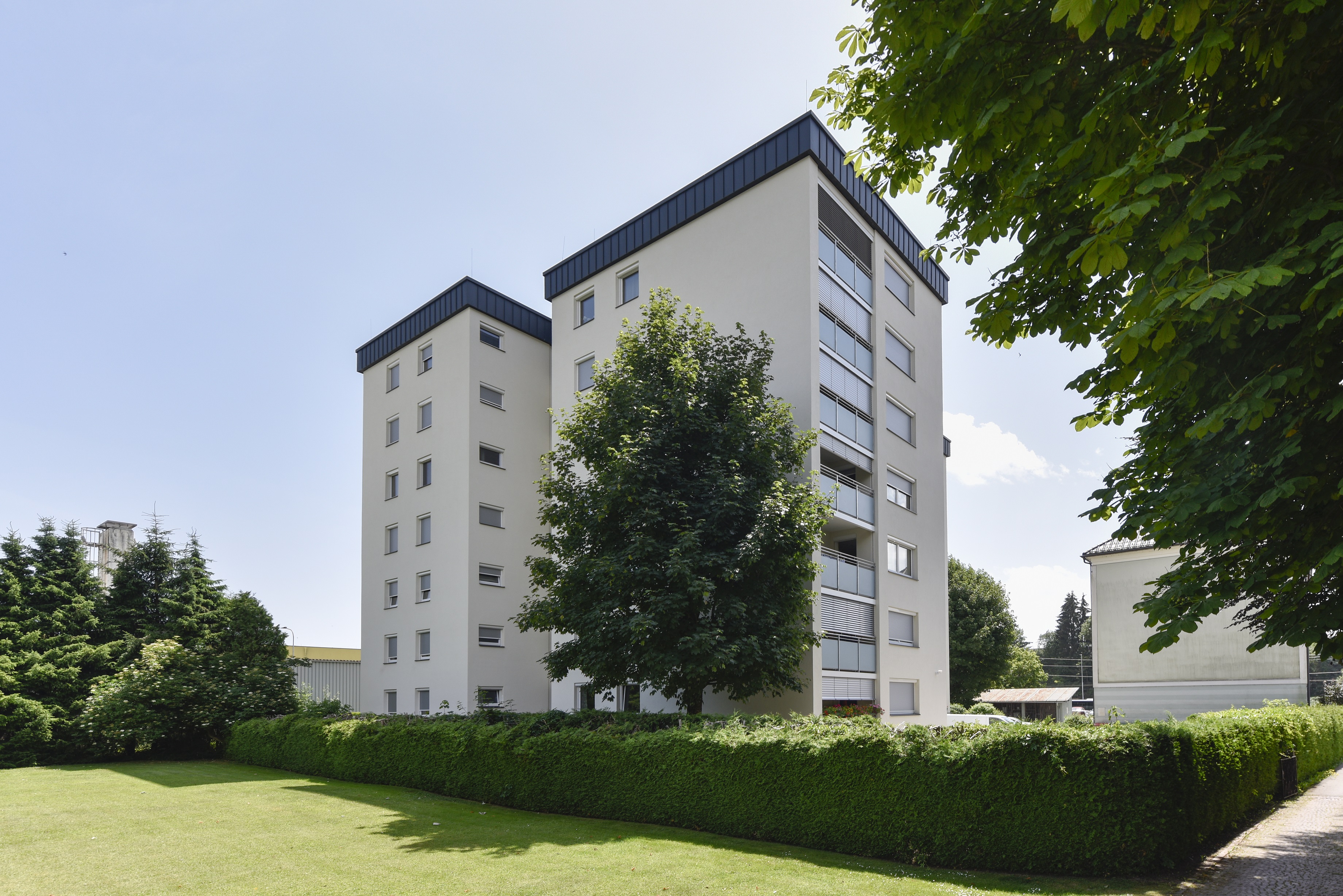
BUWOG residential complex in Feldkirchen
BUWOG residential complex
Ghega Allee 3
9560 Feldkirchen, Carinthia
Refurbishment 202
The BUWOG building on Ghega Allee in Feldkirchen (Carinthia) is an example of thermal rehabilitation. The rehabilitation of the residential building included insulation of the basement ceiling, the outer façade (mineral wool in each case) and the ceiling of the top floor as well as replacing the windows and installing a sun protection system (roller shutters with heat-insulated lightweight metal awnings).
Result: the heating requirement was reduced by more than two thirds from 91.7 kWh/m²a to 28.7 kWh/m²a.
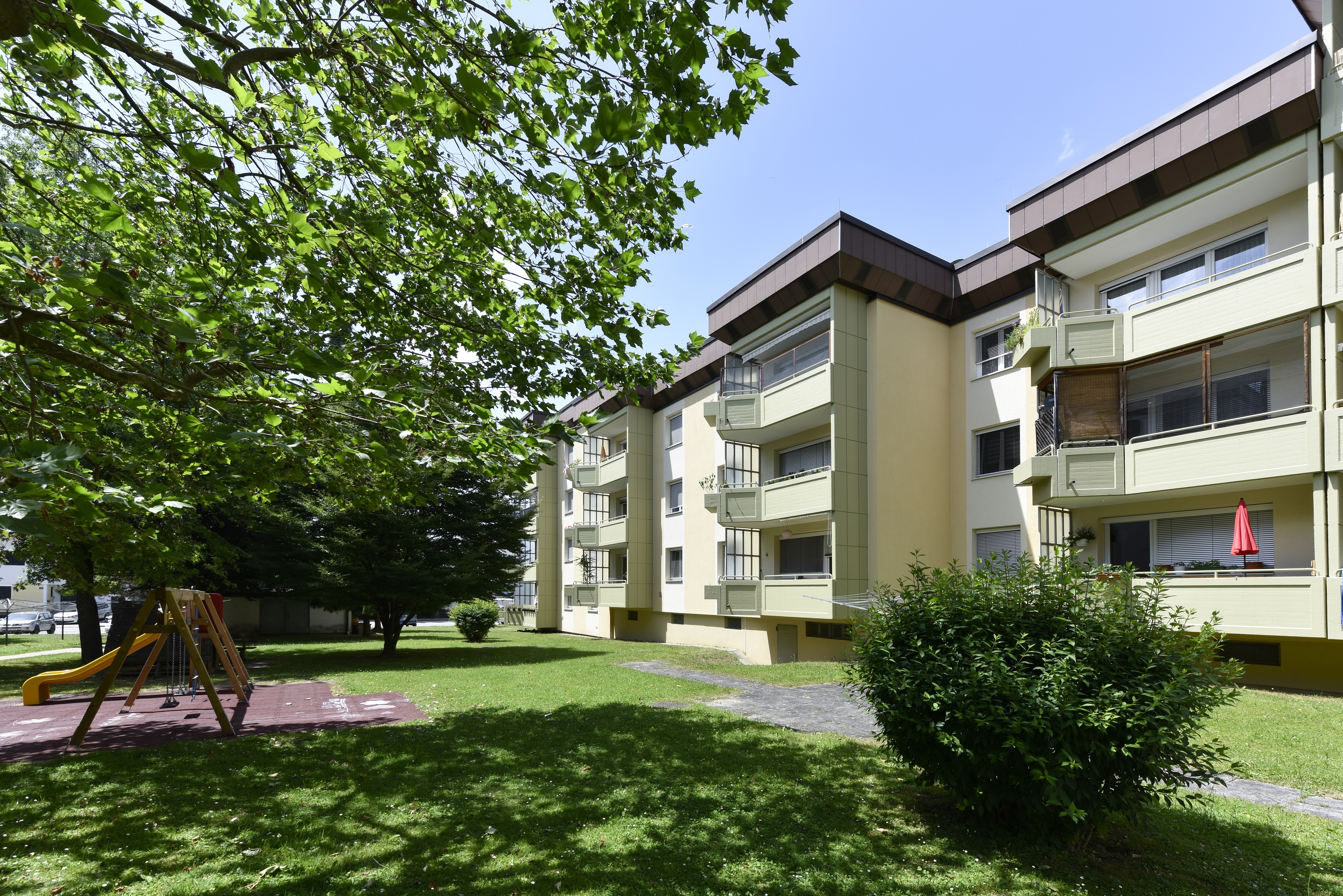
Renovated residential building with landscaped outdoor areas
BUWOG residential complex
Rangentinerstraße 12-13
9560 Feldkirchen, Carinthia
Refurbishment 2020
Another example of our ongoing rehabilitations: the BUWOG apartment building in Rangentinerstraße in Feldkirchen (Carinthia). In addition to insulating the façade and basement ceiling, the flat rooftop was refurbished in the form of a raised roof truss and the top floor ceiling was insulated underneath.
Result: the heating requirement was nearly halved from 46 kWh/m² annually to 26 kWh/m². The energy demand declined from 102 kWh/m² annually to 70 kWh/m².